

Most people know that working out is a great way to stay fit, healthy and happy. Additionally, and lesser known, physical activity helps increase cognition. When you exercise your heart- you exercise your brain! Previous studies involving exercise and cognition were focused on decreasing the risk of dementia in the elderly. However, with new technological advances, there is more research showing the cognitive benefits of exercise at all ages. In this post, we will explore these new advances and how they translate to the positive influence on cognition and brainpower.
Read More
Throughout the collegiate championship series, we will highlight some key training elements that can help you perform at your best. In this episode, I have chosen to highlight three exercises. The first is the Superman Level 2 - a great scapula, shoulder and back maintenance exercise and one that also prepares you for explosive movements such as today's Incline 3-Way Clap Pushup. This is a great to add during your championship phase. The Seated Hamstring on Hamstring is the final exercise. It is a very useful recovery exercise to use post-travel and post-competition. See you back here next week, Bridge fans.
Read More
As elite athletes, we take pride in doing everything we can to ensure personal and team success. Whether it’s lifting 5 more pounds than last week or opting out of a weeknight social event to study or sleep- the time we commit to our sport is no small feat. Most collegiate teams train 20 hours a week (the maximum amount regulated by the NCAA). That number grows to over 1000 hours per year of high intensity training. However, one common aspect that many young athletes do not consider with regard to their training is alcohol consumption. In college, our sports nutritionist told us that one night of drinking can undo an entire week’s worth of exercise.
Read More
It's great to have you back, Bridge coaches and athletes. It is going to be tough to follow up the 2014 Sochi Olympics, but fortunately, we have plenty of championship events in the near future. To lead off, we have the NCAA Swimming and Diving Championships, featuring some of the best international aquatic stars. I truly believe that athletes hone themselves both athletically and personally at the collegiate level, and I am looking forward to seeing these athletes perform the their highest levels. I hope that you enjoy this time of the year as much as I do. Stay tuned in the weeks to come as I will focus on exercises to include during your championship phase.
Read More
As athletes our training logs are filled with pounds lifted, plays made, distances traveled and paces held. There is no doubt these are vital factors to increase performance, but how can the timing of these practices play into improved performance? In this post I will review the effects of training at different times of the day and reveal important facts that can help you in your next competition-so keep reading!
Read More
With the 2014 Sochi Winter Olympics around the corner, it is a great time to discuss training at altitude and its impact on competitions. Athletes who participate in Winter Olympic events must train and compete where the total air pressure is much lower and there are fewer oxygen molecules present. For athletes to perform successfully with less oxygen in every breath, they must spend an extended period of time at altitude while their bodies make physiological adaptations to the environment.
Read More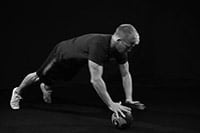
Bridge coaches and athletes, following is the final video in our Speed and Recovery Series. For this week's episode, we will preview the Medball Ballistic Pushup and the 3-Way Shoulder Stretch Series. The MB Ballistic Pushup may seem to be an upper-body exercise, but I classify it as a full-body plyometric exercise. It will help increase upper-body power, while strengthening the mid-section and lower back. It is a complete fingertips-to-toes movement. To relieve pressure placed on the shoulder joints and scapula, I have chosen to focus on the 3-Way Shoulder Stretch Series. This series will help the muscles used in the previous ballistic movement to recover for the next bout of speed work.
Read More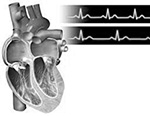
Resting heart rate simply refers to one’s heart rate at rest. Establishing an average resting heart rate can be a very useful training tool to monitor one’s recovery. I have found taking my daily resting heart rate as a wonderful gauge of my fatigue levels during the season. How can you utilize this training tool? Keep reading!
Read More
Welcome, Bridge coaches and athletes, to the third installation of the Speed and Recovery Series. Today, our resident Olympians will be taking us through the speed exercise, Incline Streamline Pushup, and the recovery, 3-Way Kneeling Lat Stretch. The Incline Streamline Pushup is an upper-body plyometric exercise. It is great for developing fast-twitch speed in the upper-extremities and hips. The 3-Way Kneeling Lat Stretch focuses on the muscles used in the ballistic upper-body movement, and is an excellent way to the body to recover and prepare for competition.